What to Expect on a Dolphin Tour
If you have never been out, what to expect on a dolphin tour is mostly this: a car park, a check-in table, twenty minutes of running to reach the water where the animals are, then a boat that goes quiet and drifts while a pod decides whether to come over. Two hours dock to dock. This is that sequence in order, where to sit for the best of it, and how the whole thing works when there is a four-year-old in the party, as of July 2026.
Quick answer
Expect about two hours dock to dock, with check-in 30 minutes before departure. The boat runs out through sheltered back bay, the captain works known feeding areas, and when a pod appears the engine goes to neutral and the boat drifts rather than closing in. Most passengers see their first dolphins within about 15 minutes. Nothing is sold on board, there is no toilet on the shared boats, and children of any age are welcome on them.
Key takeaways
- Arrive 30 minutes early. The boat leaves on time, not on stragglers
- Best seats: amidships in the shade for comfort, stern rail for photographs
- When dolphins appear the throttle comes off. That is the law working, not a delay
- First sighting is usually within about 15 minutes, but nobody guarantees it
- No toilet on the shared boats. One private charter has a full standing bathroom
- Children of any age ride the boats; the kayak trip starts at 5
Before You Arrive
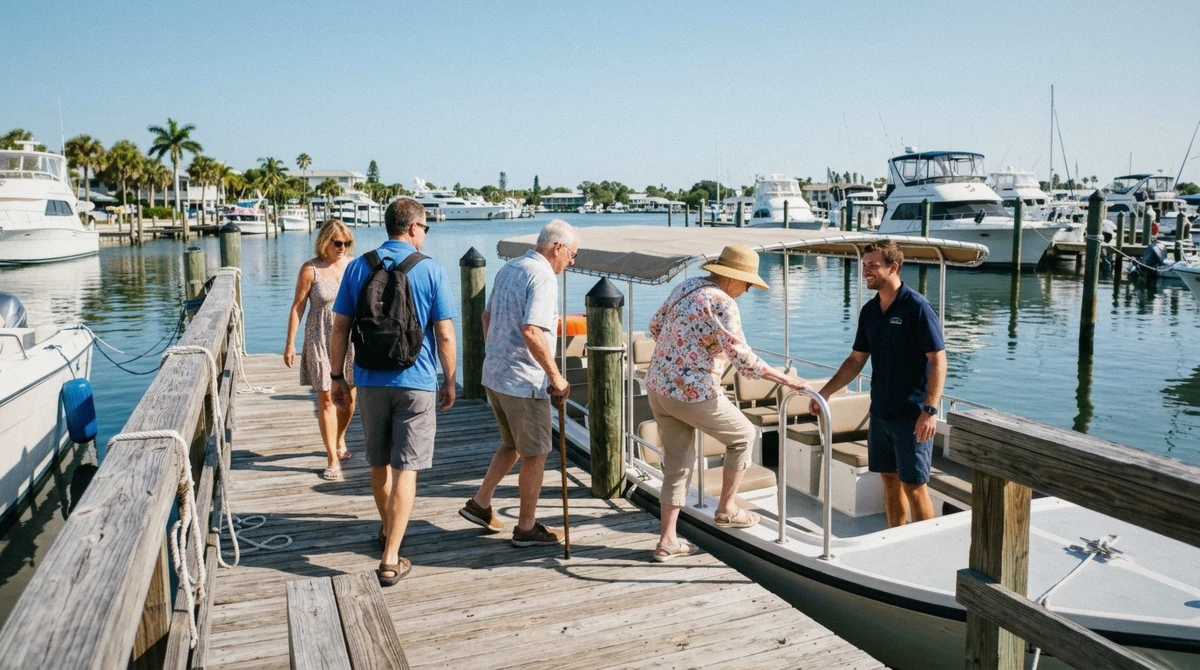
The shared boats leave from Waterline Villas & Marina at 5325 Marina Drive in Holmes Beach. Parking is the gravel lot behind the two buildings, and check-in is around the front near the water. The operator asks for 30 minutes, and that is not padding: they are counting heads against a manifest, and a departure timed to the light or the tide does not wait.
The shared boats take up to 40 travellers and need a six-passenger minimum to sail, while the private charters cap at six people. On a shared departure you will be sharing a deck, and on a quiet weekday out of season you may find the trip cancelled for want of numbers.
Bring what you need for two hours, because nothing is sold once you are aboard. The crew carries water; food, snacks and drinks are yours to supply, and alcohol is allowed on the shared boats. Cash for the crew belongs in a pocket, since there is no card machine on the water.
One detail that catches people out: the shared boats carry no toilet. Two hours is manageable for most adults and less so for a five-year-old with a full water bottle, which is the practical argument for the private charter that carries a standing bathroom with a flushing toilet.
The Two Hours, In Order
Times are approximate and shift with the tide, the weather and where the animals are working that day.
-
T minus 30
Check in at the dock
Park, walk to the check-in table, wait near the boat. Sunscreen goes on here, not later.
-
T minus 5
Boarding and the safety brief
Life jackets pointed out, seating explained, where to stand when the boat is moving.
-
0:00
Out through the marina
Idle speed through the no-wake zone, which is when the captain usually starts talking.
-
0:10
The run across the back bay
Sheltered, usually flat. This is the windy part, and where hats go overboard.
-
0:15 to 0:30
First working area
Bean Point, a channel edge or a bait line. Engine off, everyone scanning.
-
0:30 to 1:20
Moving between spots
Two or three more areas, with drifts wherever animals show. Wildlife commentary throughout.
-
1:20 to 1:40
The far point of the loop
Longboat Key water or out into the Gulf, depending on conditions and the trip.
-
1:40 to 2:00
Back to the dock
The fastest leg. Hold your hat and expect spray on a breezy day.
Where to Sit
There is no bad seat on a boat this size, but there are better ones depending on what you came for.
For comfort, sit amidships on the shaded side. The middle of the boat moves least, which matters if anyone is prone to seasickness, and the daytime shared boat carries a roof over most of the deck. The sunset boat splits its seating between sun and shade; take the shade going out and swap on the way back.
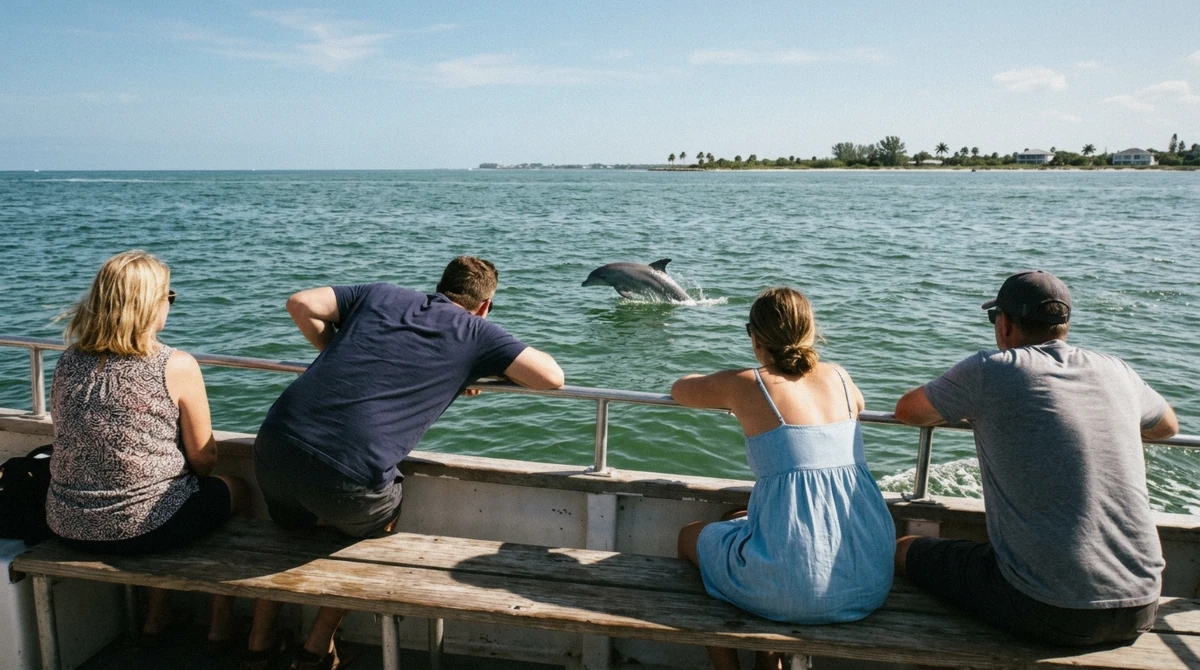
For photographs, the stern rail wins. Dolphins ride the wake, so the best frames on this coast are shot looking back over the transom while the boat is moving slowly. It is also the wettest seat on a choppy day, which is a fair trade.
For children, sit where you can hold onto them and where the rail is at their chest rather than their waist. Crews will point out the right spot if you ask, and reviewers regularly describe first mates helping small passengers spot animals.
Seat by seat
On a boat carrying up to 40 people, position is the only variable you control.
| Where | Motion | Shade | Photos | Best for |
|---|---|---|---|---|
| Amidships, shaded side | Least | Yes on the day boat | Restricted view | Seasickness, small children, long trips |
| Bow | Most | None | Wide open, wet | Wind in your face and the first sight of everything |
| Stern rail | Moderate | Partial | Best. Dolphins ride the wake | Cameras |
| Standing at the console | Moderate | Usually yes | Good | Hearing the captain's commentary |
What Happens When Dolphins Appear
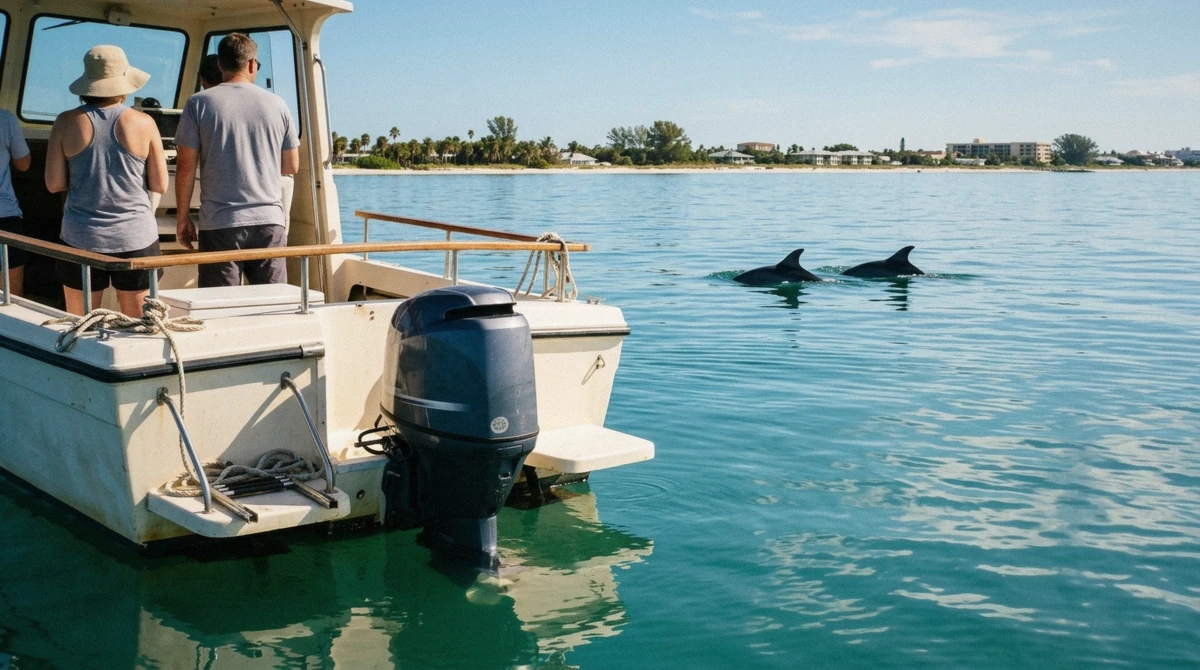
The first time it happens most passengers expect the boat to speed up. It does the opposite.
The captain comes off the throttle and the boat drifts. That is not caution about the animals disappearing; it is the law. Federal guidance asks for 50 yards from wild dolphins, and operators working to the Dolphin SMART standard put the engine in neutral when animals approach rather than steering into them. What follows is a few minutes of quiet with everybody watching one patch of water.
Sometimes the pod comes to the boat and rides the wake when the engine goes back on, which is legal because the animals chose it and it is the shot everyone wants. Sometimes they carry on with what they were doing and the boat moves off to the next area. Both are normal. A captain who chases a pod around the bay is breaking the rules and, in our experience, seeing less than the one who waits.
Most passengers get their first sighting within about 15 minutes of leaving the dock. Nobody sells a guarantee, and cold or busy days can be thin. What travellers report afterwards is the honest sample, one-star reviews included.
With Children
The boat trips take children of any age, and families are a large share of every manifest. Reviewers regularly bring toddlers and grandparents on one booking, and describe crews who make a point of getting small passengers to the rail first when something surfaces.
Two caveats worth knowing before you book. One private charter excludes infants and expectant mothers under its insurance, so read the listing rather than assuming a private boat is the family-friendly option by default. And the kayak trip has a minimum age of 5, which is the only hard age limit among the six trips on this island.
Practically, two hours is a long time for a small child with nothing to do. Snacks help, a hat with a cord helps more, and the shaded seating on the daytime boat helps most. Since the shared boats have no toilet, a bathroom stop before boarding is not optional. If any of that sounds precarious, the private charter with a flushing toilet on board costs $450 for up to six, which for a family of five or six is $75 to $90 a head and buys a route the captain will shorten if the youngest passenger has had enough.
The kayak with older children
Families with children between about 8 and 15 turn up throughout the reviews of the paddle trip, and the guides adjust the pace to the group. The water is shallow, sheltered and calm, and the tandem sit-on-top kayaks are the stable kind. It is a genuinely good option for a family that would be bored on a bench, provided everyone is happy to get wet.
Under 5s cannot go.
Age limits across the six trips
Last verified July 2026. Check the listing you book, since the private boats set their own terms.
| Trip | Minimum age | Toilet on board | Notes |
|---|---|---|---|
| Daytime shared boat | None | No | Roof over most of the deck |
| Sunset shared boat | None | No | Sun and shade seating |
| Shared cruise | None | No | Same operation, live calendar |
| Private World Cat | None stated, no infants | Yes, flushing | Insurance excludes infants and expectant mothers |
| Private Regal | None stated | No | Waiver signed online before departure |
| Sunset kayak | 5 | No | You will get wet |
If It Goes Wrong
Three things can spoil a trip here, and none of them is a shortage of dolphins.
A cancelled departure. Public boats need six passengers to sail, and a quiet weekday slot in the shoulder season can miss it. You are rescheduled or refunded, and a refund routed through a booking platform takes a few business days rather than the same afternoon.
A storm. Gulf squalls build fast in summer and a trip can be cut short. If that happens, contact the operator directly rather than the platform, because the operator is the one who can put things right. Reviewers who called the office got faster resolutions than those who waited.
Seasickness. Back bay water is sheltered and usually flat, and the run out into the Gulf is where an afternoon sea breeze puts chop on the surface. Take a remedy 30 to 60 minutes before departure rather than when it starts, book a morning slot, and sit in the middle of the boat.
All six trips carry free cancellation up to 24 hours before departure, which is the tool that solves most of this. Use it when a forecast turns certain instead of hoping.
Which Trip Fits Your Group
If It is your first time and you want the simplest version
A morning shared boat, amidships in the shade
If You are travelling with a toddler
The private charter with a bathroom on board, or a boat trip timed right after a nap
If You want photographs above everything
The stern rail, and an evening departure for the light
If Someone in the party gets seasick
Morning slot, middle of the boat, remedy taken an hour ahead
If Your children are 8 to 15 and easily bored
The kayak trip, where they are doing something rather than sitting
If You want to know the odds before you spend anything
An hour on a pier first, then decide
The Short Version
Arrive early, dress for wind rather than the car park, sit where the boat moves least, and expect the engine to stop rather than speed up when something appears. Bring water, snacks and cash, and take a bathroom stop before you board.
The rest is out of everyone's hands, which is the point of a wildlife trip. The Anna Maria Island dolphin tours these boats run all work the same water in the same way, and the kit list and which slot to book between them cover the two decisions that actually change your morning.
First-Timer Questions
What happens on a dolphin tour?
Check-in 30 minutes before departure, a short safety brief, then about two hours on the water. The boat runs out through sheltered bay, stops at two or three known feeding areas, and drifts with the engine off whenever animals appear. You are back at the same dock at the end.
Where is the best spot to sit on a dolphin cruise?
Amidships on the shaded side for comfort and for anyone prone to seasickness, since the middle of the boat moves least. The stern rail is the best seat for photographs, because dolphins ride the wake, and the wettest on a choppy day.
What should I bring on a dolphin tour?
Water, snacks, sunscreen applied before boarding, a hat with a cord, sunglasses on a strap and cash for the crew. Nothing is sold on board and there is no card machine on the water. A light jacket from November through April.
Can you take a baby on a dolphin cruise?
On the shared boats, yes, at any age, and families do it constantly. One private charter excludes infants and expectant mothers under its insurance, so check that listing specifically. The kayak trip has a minimum age of 5.
How rough is the water?
The back bay is sheltered and usually flat. The run out into the Gulf is where an afternoon sea breeze puts a short chop on the surface. Morning departures are consistently the calmest.
Is there a toilet on board?
Not on the shared boats, which is worth planning around on a two-hour trip. One private charter carries a full standing bathroom with a sink and a flushing toilet, which is unusual for a trip this length.
What if you do not see any dolphins?
No operator here sells a guarantee, and there is no refund for a quiet day. Most passengers see their first pod within about 15 minutes because the population is resident, but wild animals occasionally do not cooperate, particularly in cold weather.
How long are you actually on the water?
About two hours dock to dock, of which roughly twenty minutes at each end is running time. The productive middle is around eighty minutes of working known areas and drifting where animals show.