The Best Time to See Dolphins on Anna Maria Island
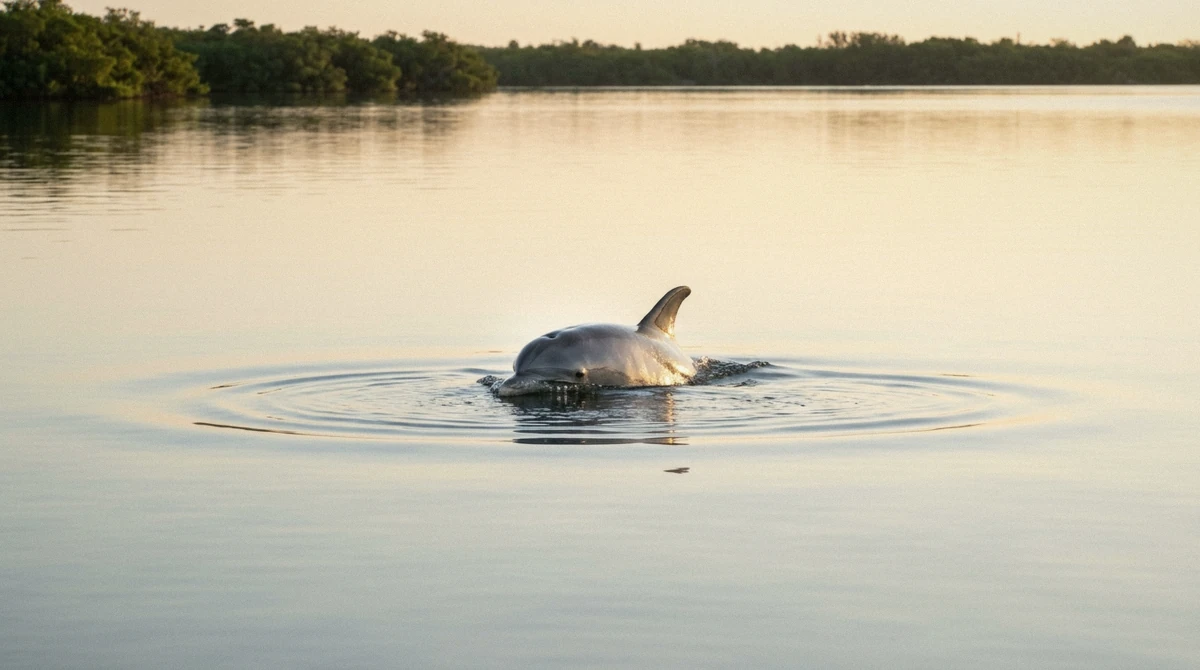
The best time to see dolphins Anna Maria Island can offer is not a month at all, which is the part most guides get wrong. These animals are residents: about 170 of them live in this bay year-round and none of them migrate, so February works as well as July. What genuinely moves your odds is the hour, the tide and whether the weather lets a boat stay out. Here is how each one works, with the numbers, as of July 2026.
Quick answer
Go in the morning, on a moving tide, in any month you like. There is no dolphin season on Anna Maria Island because the population is resident year-round. Early departures give you flat water and feeding animals; a falling tide pulls bait through the passes and the dolphins follow it. The only genuinely bad timing is a July or August afternoon, when storms cut trips short.
Key takeaways
- No closed season: about 170 resident dolphins, every month of the year
- Best hour: the first departure of the day, before the sea breeze builds chop
- Best water: a falling tide through Longboat Pass and the mouth of Tampa Bay
- Driest months: April at 41 mm of rain, November at 45 mm
- Wettest: July and August at 193 mm each, mostly afternoon storms
- Winter bonus: below about 68°F the manatees arrive, so trips become two-species trips
Why There Is No Dolphin Season Here
Ask this question about whale watching and the answer is a calendar. Ask it here and the answer is a shrug, for a good reason. The bottlenose dolphins off this island belong to the resident Sarasota Bay community, studied continuously since 1970 and about 170 animals strong. They do not migrate. The same families work the same channels in January that they work in July.
That single fact reshapes the whole planning question. You are not choosing a month to intercept animals that might not be there. You are choosing conditions: how flat the water is, how much light you have, whether bait is moving, and whether an afternoon storm is going to end your trip early. Those are the variables worth planning around, and the rest of this guide takes them one at a time.
Time of Day Beats Time of Year
Morning is the answer, and it is not close.
Three things line up before about eleven. The water is flattest, because the sea breeze that puts chop on the surface builds through the afternoon. Dolphins are actively feeding on the tide line rather than resting. And the low sun throws a fin into relief instead of flattening everything into glare, which matters enormously when you are trying to spot an animal two hundred metres out. Boats working this coast run their first departures at Bean Point at the island's north tip for exactly these reasons.
Evening is the other good window and a different experience. Late light does the same work as early light, the animals are feeding again, and you get the sky as well. The catch is the clock. Sunset here runs from about 5:36pm on 1 December to about 8:31pm on 1 July, a swing of nearly three hours, so the evening trip that leaves at 7:00pm in July leaves at about 4:05pm in December. The sunset departure and its moving clock has the full timetable.
Midday is the weakest slot. High sun, maximum glare, warmest air, most boat traffic, and animals more likely to be resting in deeper water. It still works. It is simply the hour we would give up first.
The Tide Is the Underrated Variable
Nobody sells trips on the tide, and they should. A moving tide beats slack water by a wide margin, and a falling tide is the best of all.
The reason is mechanical. When a bay this size drains through narrow gaps at Longboat Pass and the mouth of Tampa Bay, it drags bait fish with it, and predators queue at the outflow. Stand on the Longboat Pass bridge on falling water and you can watch the whole sequence: birds first, then bait breaking the surface, then fins. On slack water the same spot can look like a car park.
Check a tide table for Bradenton Beach before you pick a departure, and if two slots on your day are otherwise equal, take the one on moving water. From land, this single trick is worth more than any other advice on this page. The free shore spots are all tide-sensitive in the same way.
Month by Month on This Coast
Dolphins are in every row of this table. What changes is the water temperature, the rain and therefore the risk to your booking.
| Month | Sea temp | Rain | What it means for a trip |
|---|---|---|---|
| January | 19°C | 57 mm | Cool, calm, quiet. Manatee season. Bring a jacket |
| February | 18°C | 73 mm | Coldest water of the year, flattest mornings |
| March | 20°C | 82 mm | Spring break crowds, boats fill, book ahead |
| April | 22°C | 41 mm | Driest month. The best all-round compromise |
| May | 25°C | 80 mm | Warm, still dry-ish, storms begin late in the month |
| June | 28°C | 156 mm | Storm season starts. Take a morning slot |
| July | 30°C | 193 mm | Wettest, hottest, busiest. Mornings only |
| August | 30°C | 193 mm | As July. Shade on the boat matters more than the view |
| September | 29°C | 167 mm | Quiet and wet. Watch the six-passenger minimum |
| October | 27°C | 75 mm | Rain drops away, water still warm. Underrated |
| November | 23°C | 45 mm | Second driest. Manatees arrive. Our pick |
| December | 21°C | 57 mm | Early sunsets, cool evenings, calm water |
The short version
April and November are the two months we would book without hesitating: driest, calm, comfortable, and either side of the crowds. October is the quiet one people overlook, with warm water and the rain falling away.
July and August are not bad months for dolphins. They are bad months for schedules. Roughly 193 mm of rain lands in each, almost all of it in short violent afternoon storms that build inland and roll west over the Gulf. Book a morning departure and the same week becomes straightforward.
Weather, Cancellations and the Booking You Can Move
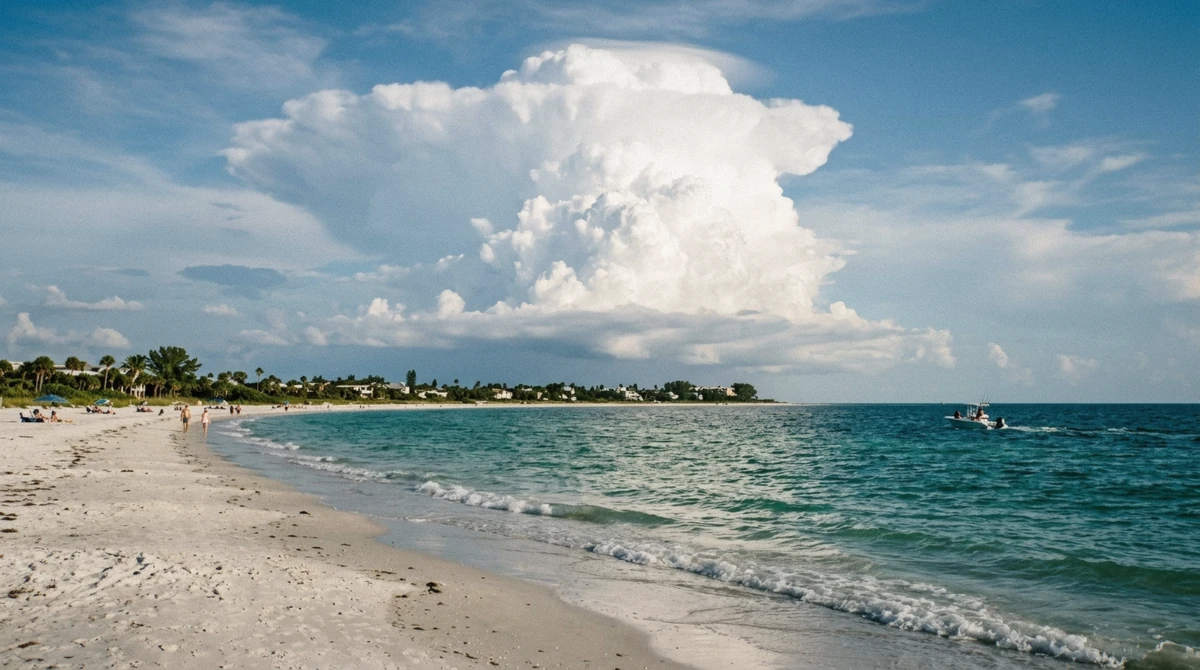
Two things end trips on this coast, and neither is a shortage of dolphins.
The first is weather. A Gulf squall in the wet season can cut a two-hour cruise to thirty minutes, and reviewers who sailed into a forecast of certain rain have written about exactly that. The defence is free cancellation up to 24 hours before departure, which every trip on this island carries. Treat a hundred percent forecast as a reason to move your date yourself rather than to gamble on the operator's judgement.
The second is passenger numbers. Public boats need a six-passenger minimum to leave the dock, so the departures most likely to be cancelled are the quiet ones: a first slot on a weekday in September, not a Saturday evening in March. If your dates are flexible and the shoulder season is thin, book the busier slot. What the reviews show about cancellations covers how the refunds actually work when it happens.
Pick Your Window
If You want the highest chance of flat water and feeding animals
The first departure of the day, on a falling tide
If You want dolphins and a sky
The evening trip, remembering it leaves at 4:05pm in December and 7:00pm in July
If You are here in July or August
Morning only, and keep the cancellation window in mind
If You want manatees as well as dolphins
November through March, once the Gulf drops below about 68°F
If You are choosing a month for the whole trip
April or November: driest, calmest, either side of the crowds
If You are travelling in a quiet shoulder week
Book a weekend slot rather than a weekday one, so the six-passenger minimum is met
What the Cool Months Add
Winter here is not a downgrade, it is a different trip. Once the Gulf drops below about 68°F the manatees leave open water for warm shallows, and a two-hour cruise that would have been a dolphin trip in July becomes a dolphin and manatee trip in January. Sea turtles thin out, ospreys and roseate spoonbills stay put, and the light in February is the best of the year.
The cost is comfort. Water at 18°C does not sound cold until you are doing twenty knots across it in a stiff January breeze, and the boats have no cabin. A jacket and something over your ears is the difference between a good winter trip and a two-hour endurance test. Where the manatees actually gather, and every dolphin tour running off Anna Maria Island if you would rather be on the water is a separate question with its own answer, and one of the best spots is free.
Hour by Hour, and What Each One Costs You
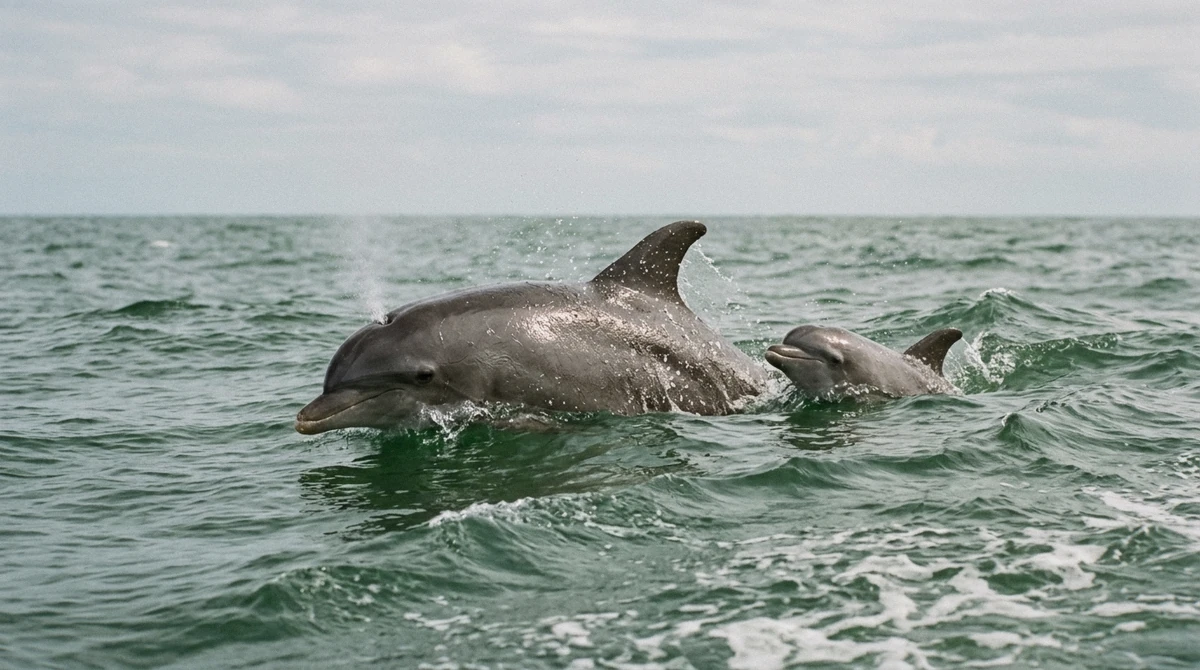
If the month is flexible and the hour is not, this is the trade you are making.
| Slot | Water | Light | Risk | Best for |
|---|---|---|---|---|
| First morning departure | Flattest of the day | Low, sharp, ideal for spotting | Lowest | Sightings, photographs, seasickness |
| Late morning | Building chop after 11am | Getting harsh | Low | Families who cannot manage an early start |
| Midday | Choppy in a sea breeze | Maximum glare | Low outside summer | Convenience only |
| Mid afternoon | Choppy | Harsh, improving late | Highest in June to September | Nothing, in the wet season |
| Sunset departure | Settling as the breeze drops | Warm and low, best of the day | Moderate | Light, photographs, a second wildlife window |
Why the first departure keeps winning
Every operator on this coast runs a first slot and it is consistently the one we would book. The sea breeze that builds through a Florida afternoon puts a short chop on the bay, and chop hides fins. Animals feed hardest on the early tide. And in the wet half of the year, a morning trip is off the water before the storms that cancel afternoons have started building.
The one argument against it is the alarm clock, and the one thing that beats it is a sunset departure on a calm evening. Everything in between is a compromise you make for the schedule rather than the wildlife.
If your week only allows the middle of the day, take it anyway. Resident animals mean a midday trip on this coast still beats a perfectly timed trip somewhere the dolphins are seasonal.
Questions About Timing
What is the best time of day to see dolphins?
Early morning. The water is flattest before the sea breeze builds, the animals are feeding on the tide line, and low light makes a distant fin far easier to spot. Evening is the second-best window and adds the sunset.
What is the best month to visit Anna Maria Island for dolphins?
April or November. Both are dry, calm and either side of the crowds, with April averaging 41 mm of rain and November 45 mm. Dolphins are present in every month, so the month you pick is really about weather and crowds.
Do dolphins leave in winter?
No. The Sarasota Bay population is resident year-round, about 170 animals, studied continuously since 1970. Winter changes what else you see rather than whether the dolphins are there.
Does the tide really matter?
More than most visitors expect. A falling tide drags bait through Longboat Pass and the mouth of Tampa Bay, and dolphins work the outflow. Slack water is the weakest condition, from a boat or from shore.
Which month has the most cancelled trips?
July and August for weather, at roughly 193 mm of rain each in short afternoon storms. September for passenger numbers, because quiet weekday departures can miss the six-passenger minimum that public boats need to sail.
When is the water warmest for a kayak trip?
July and August, at about 30°C. February is the coldest at 18°C, which is fine on a boat with a jacket and cold on a kayak where you get wet.
Is it worth going in bad weather?
Overcast is fine and often better, because glare is the enemy of spotting. Rain is different: a Gulf squall can end a trip early. Use the free cancellation window rather than hoping the forecast is wrong.